SEATING STRUCTURES
Umeå School of Architecture, 2025
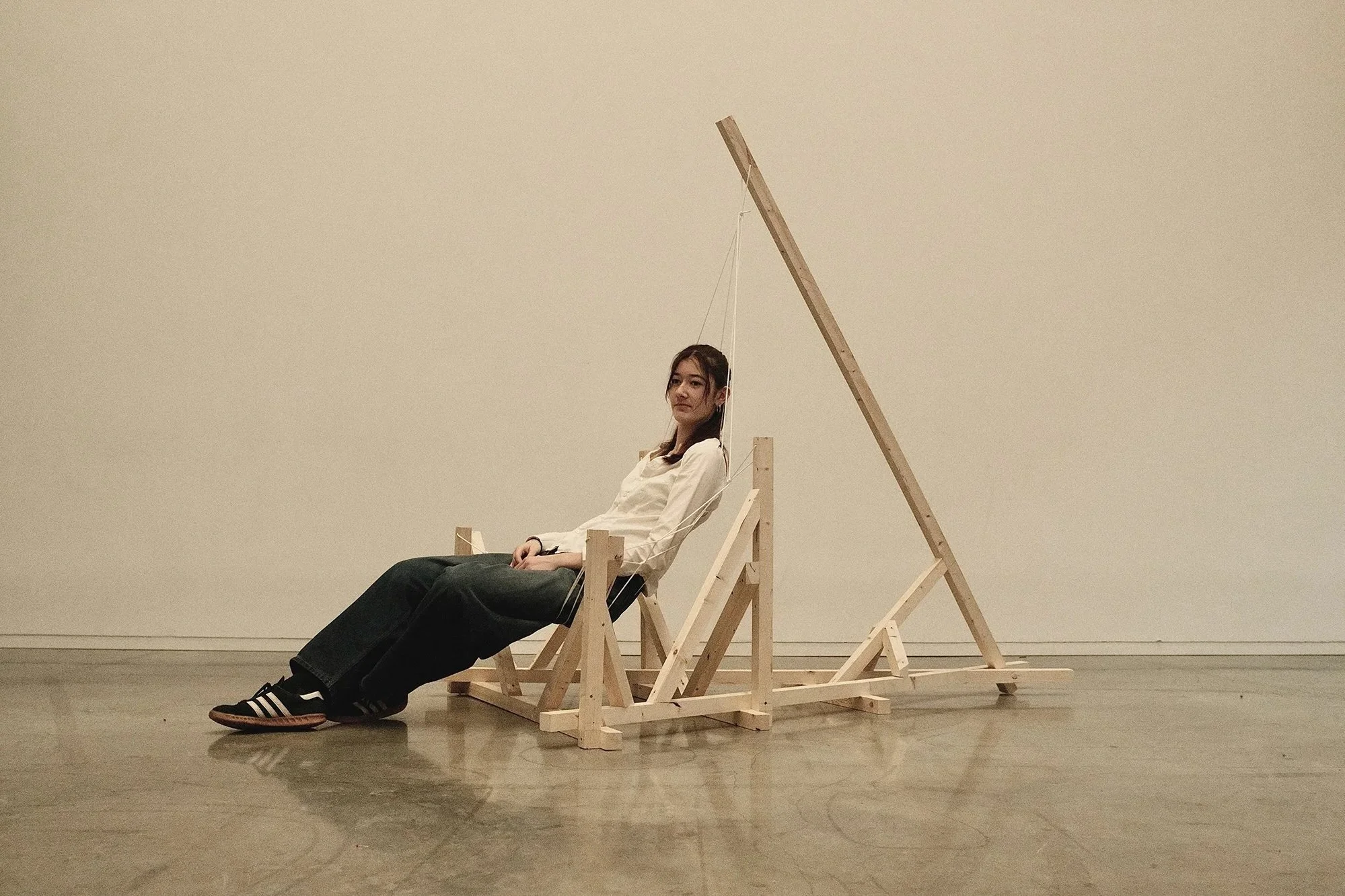
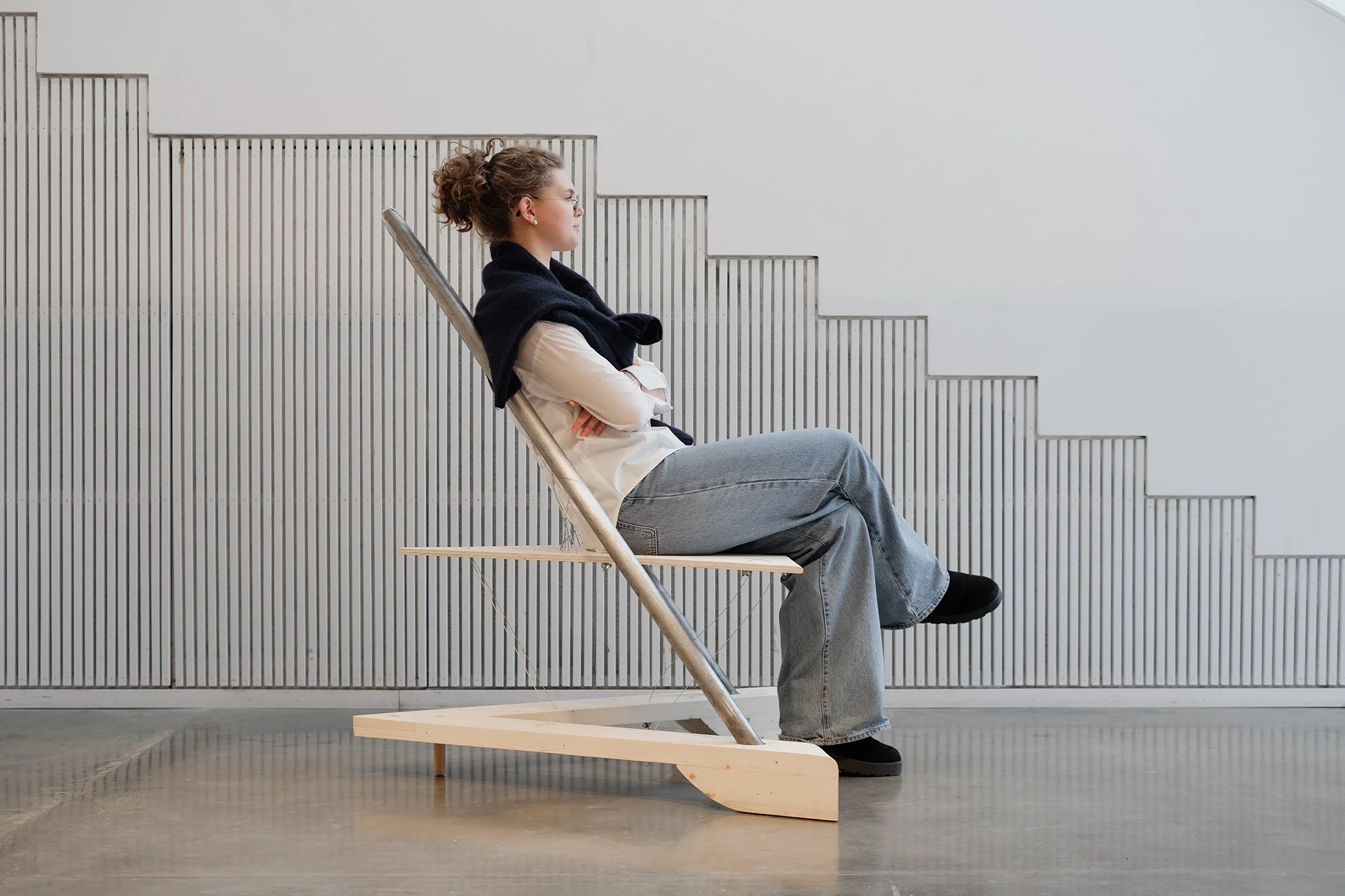
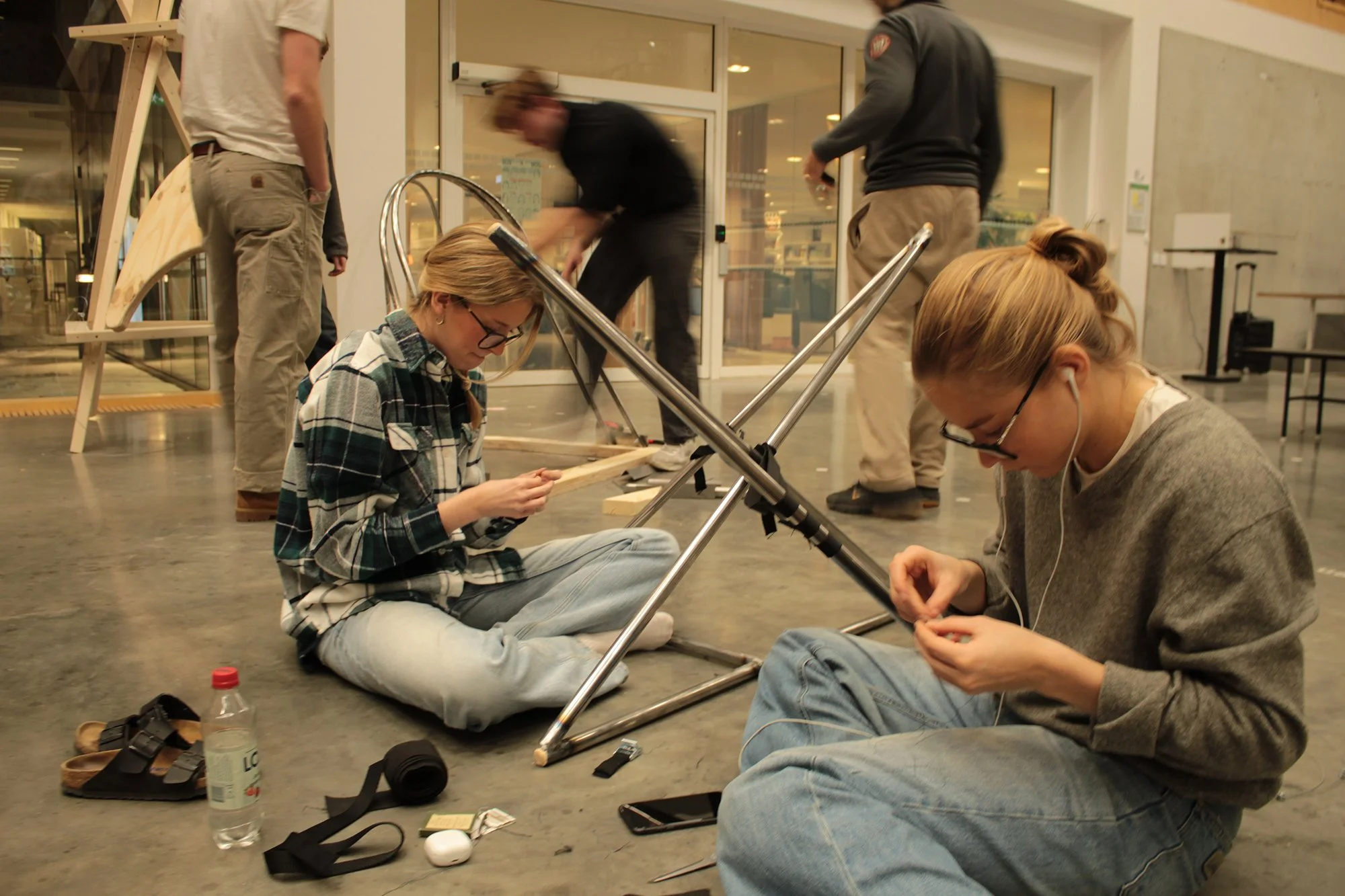
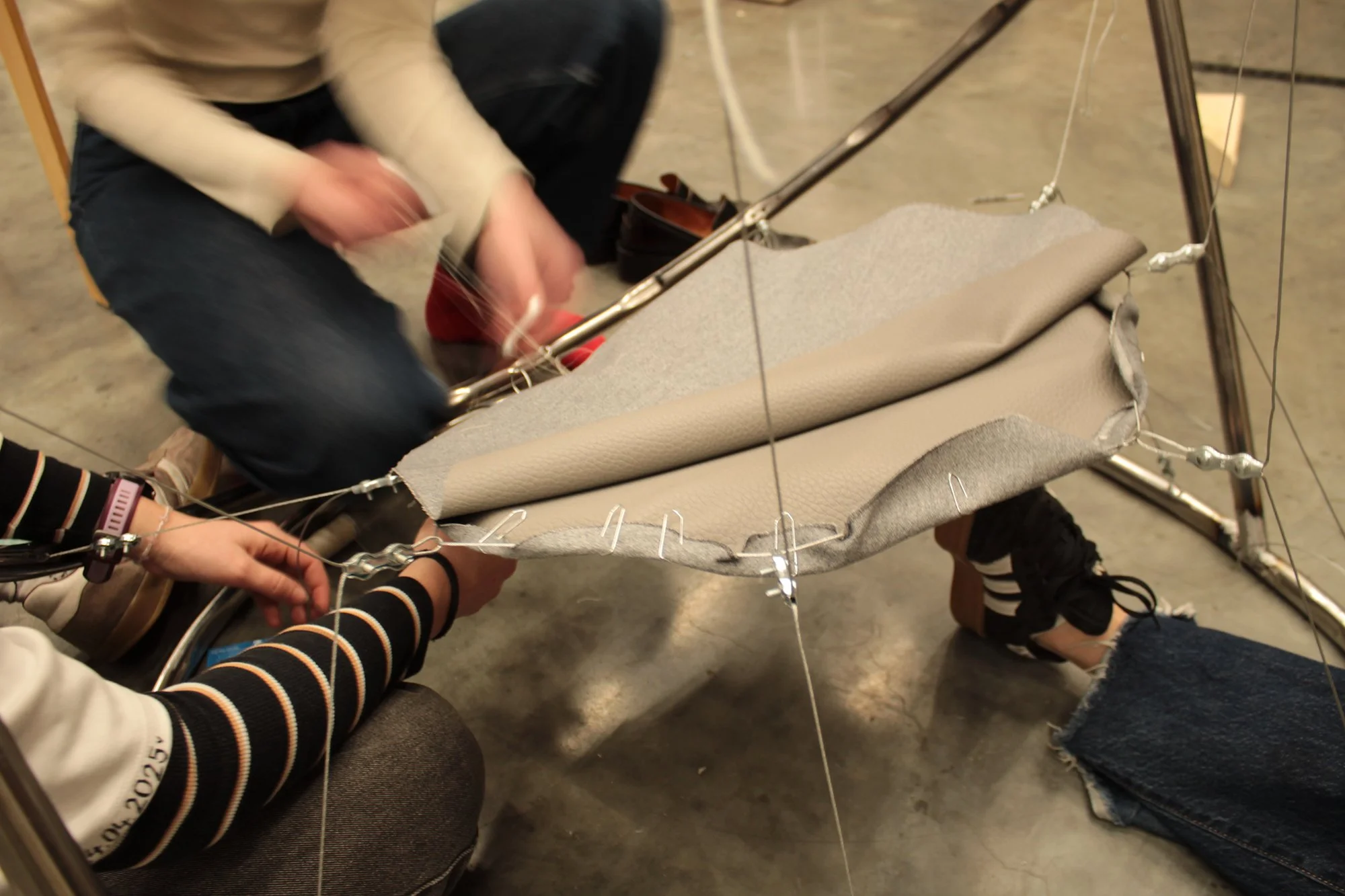
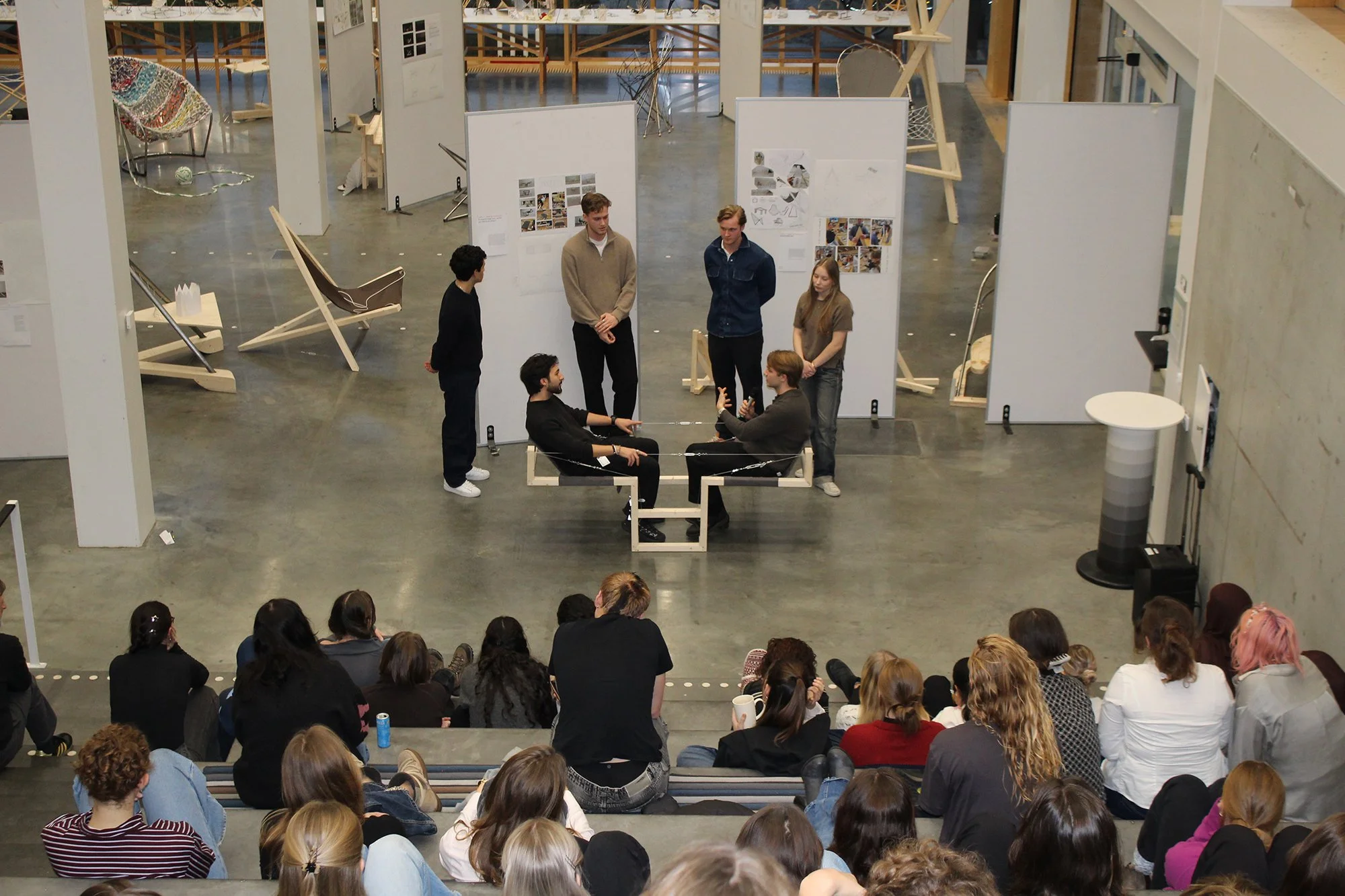
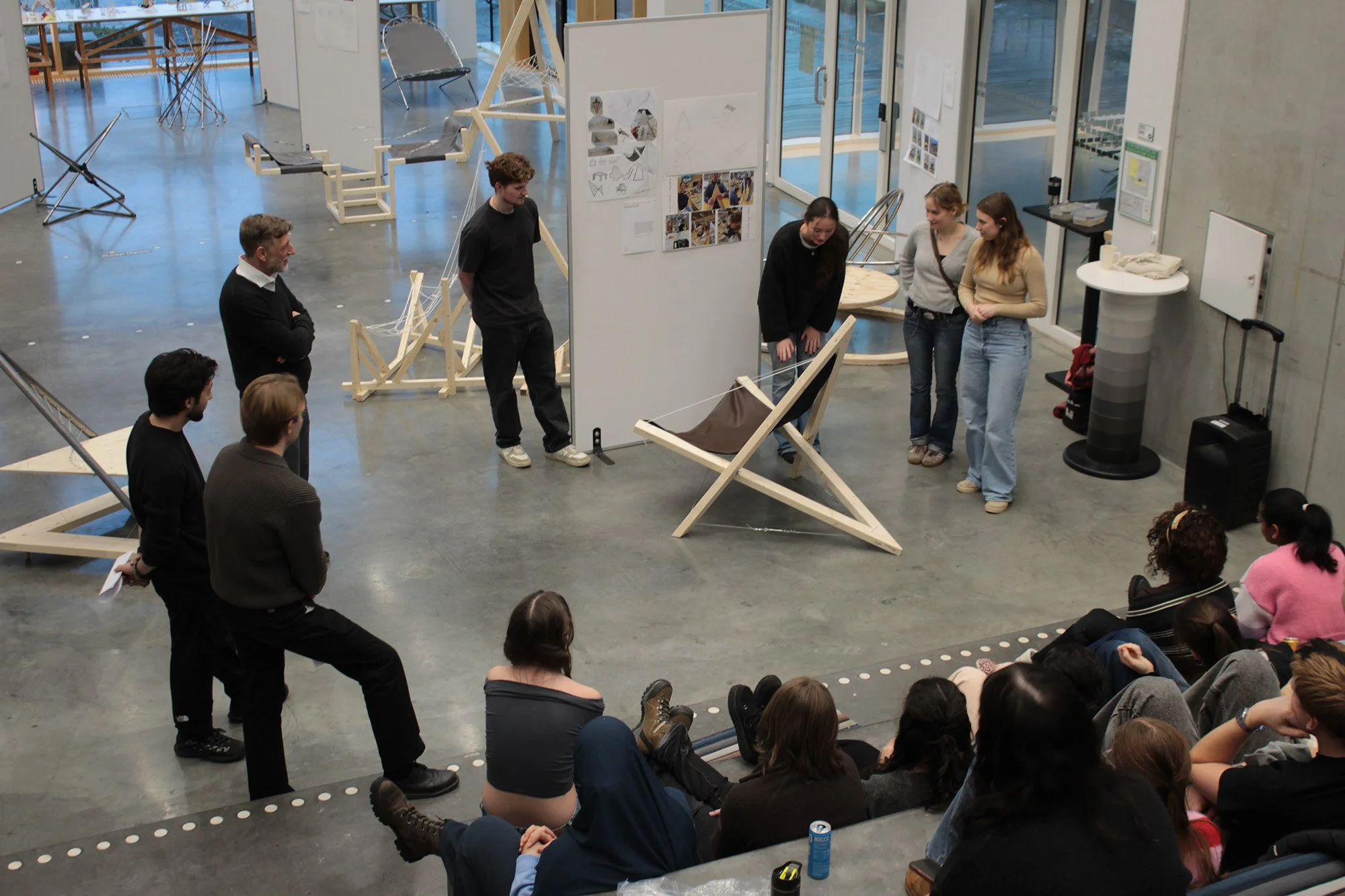
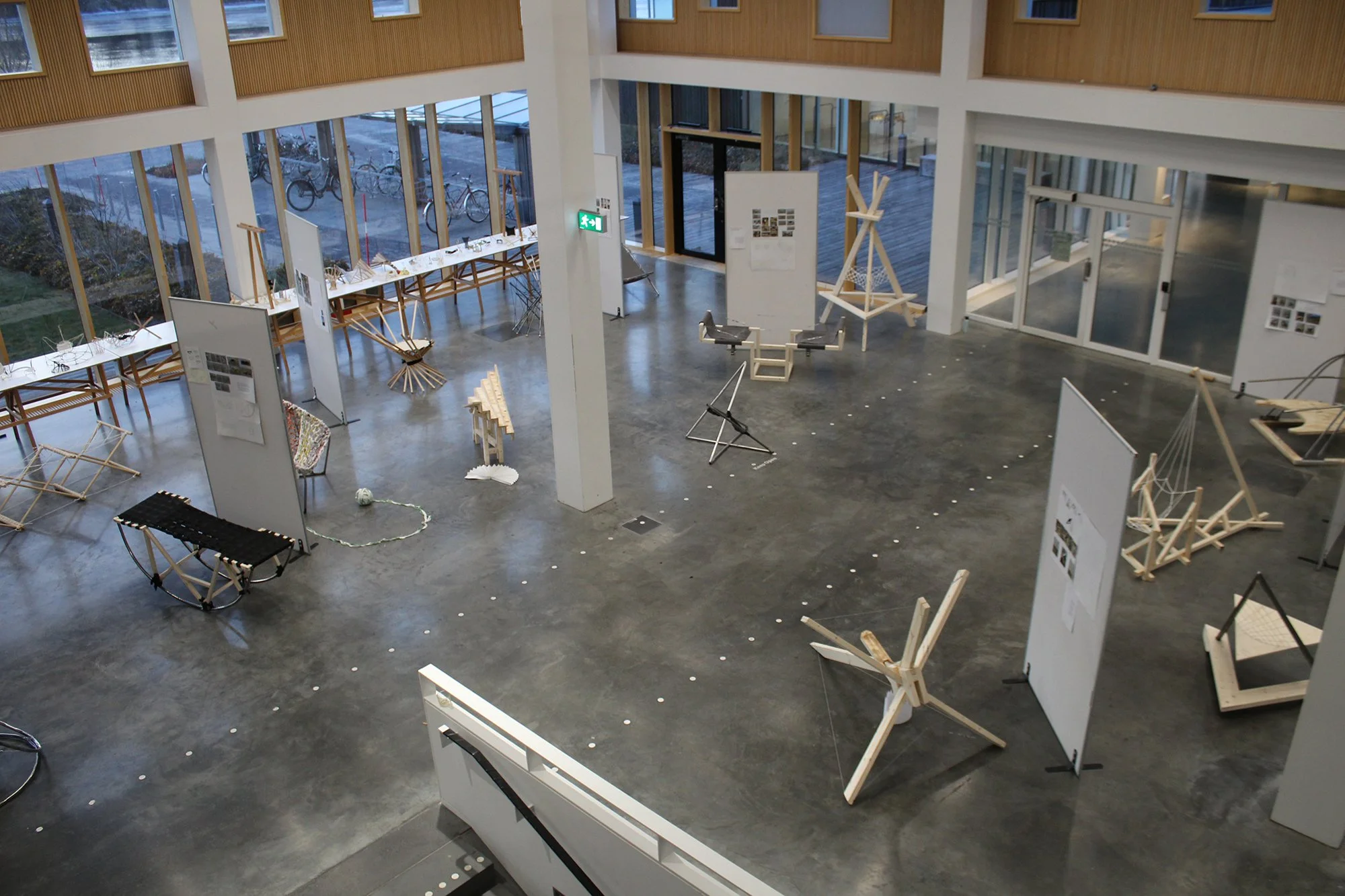
This course challenged students to translate structural behavior into inhabitable form, using seating as a vehicle to explore material performance and human use. Working collaboratively over a two-week period, students developed full-scale seating artifacts that tested fundamental structural principles at the scale of the body.
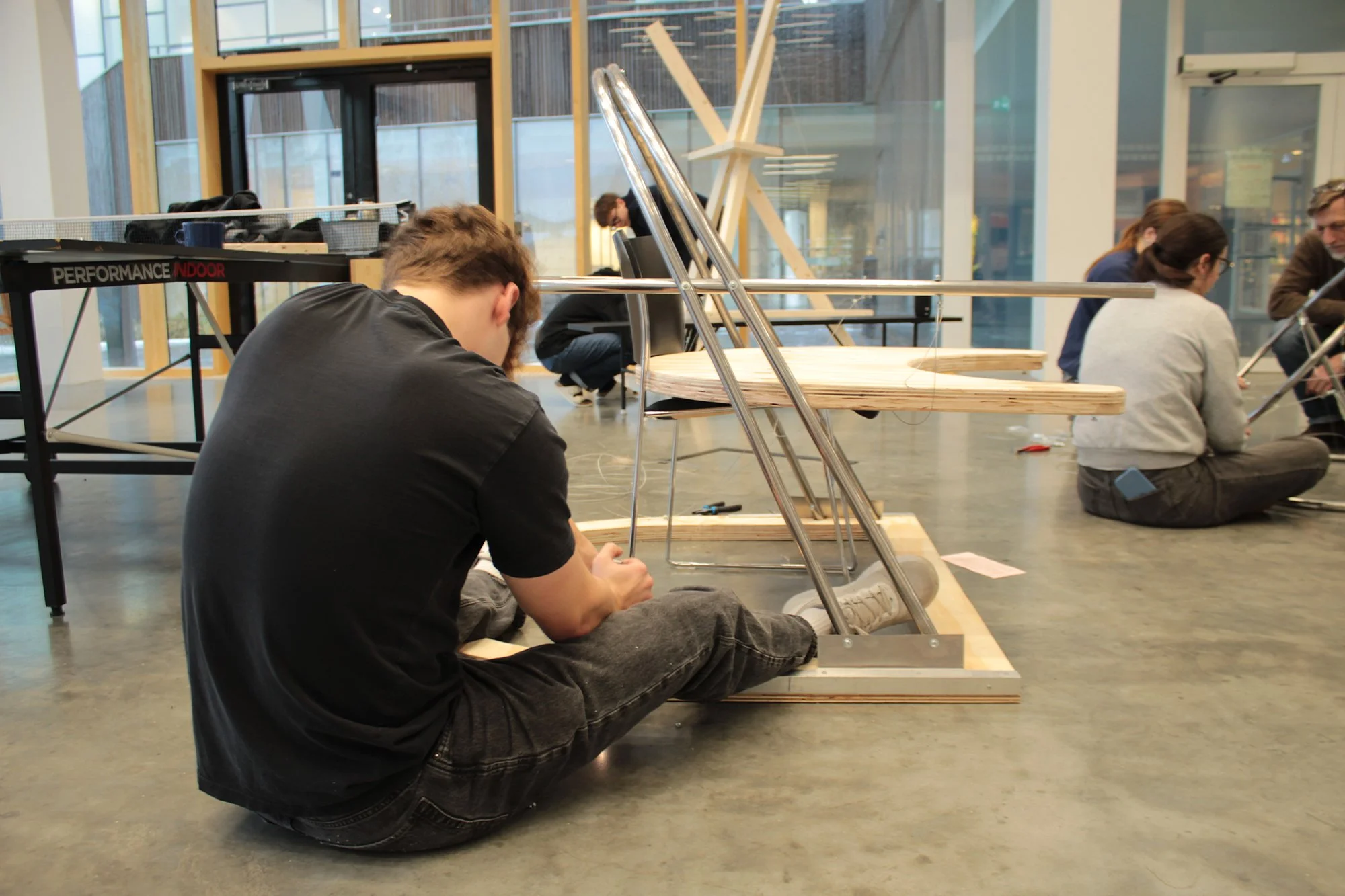
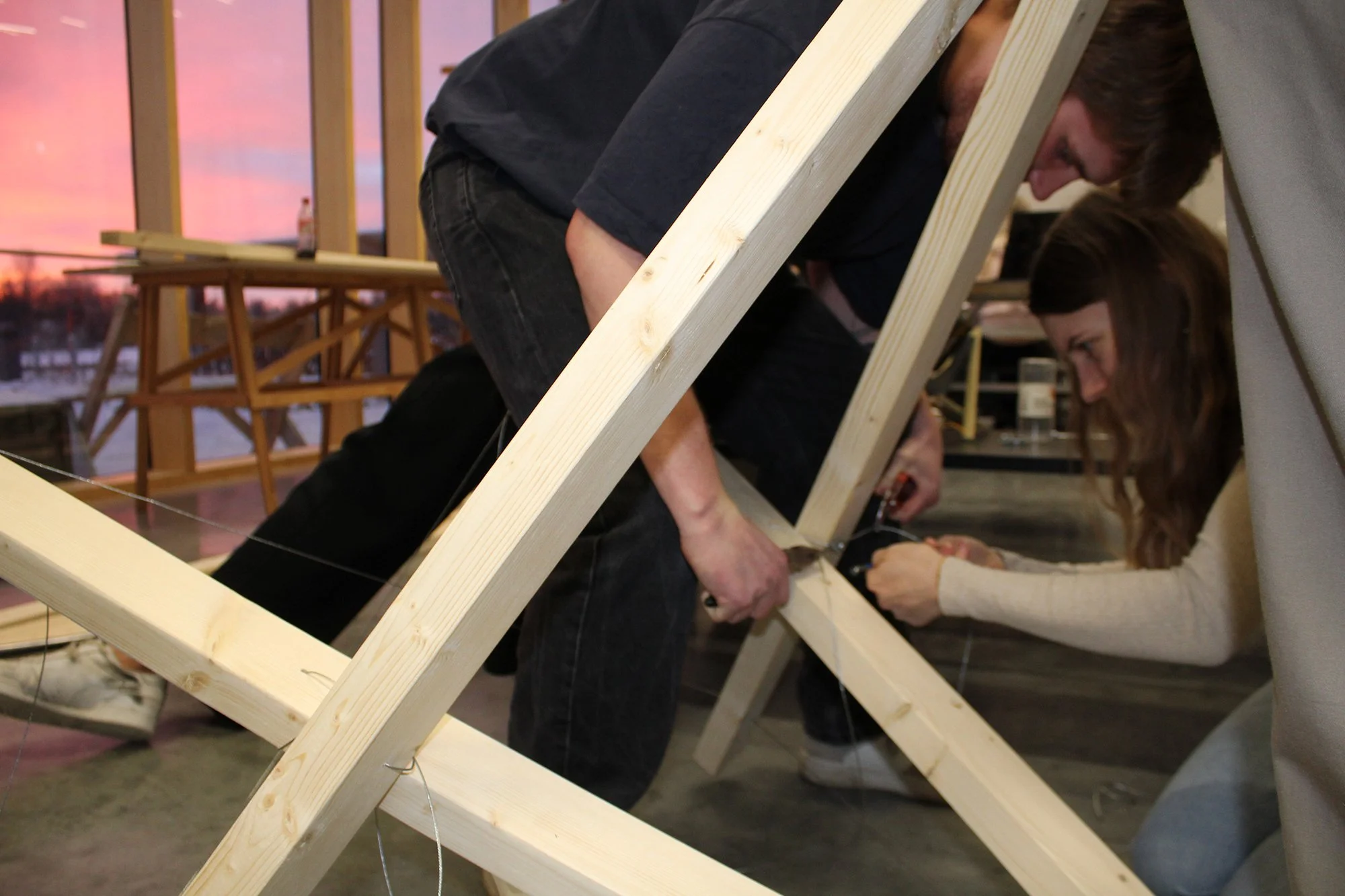
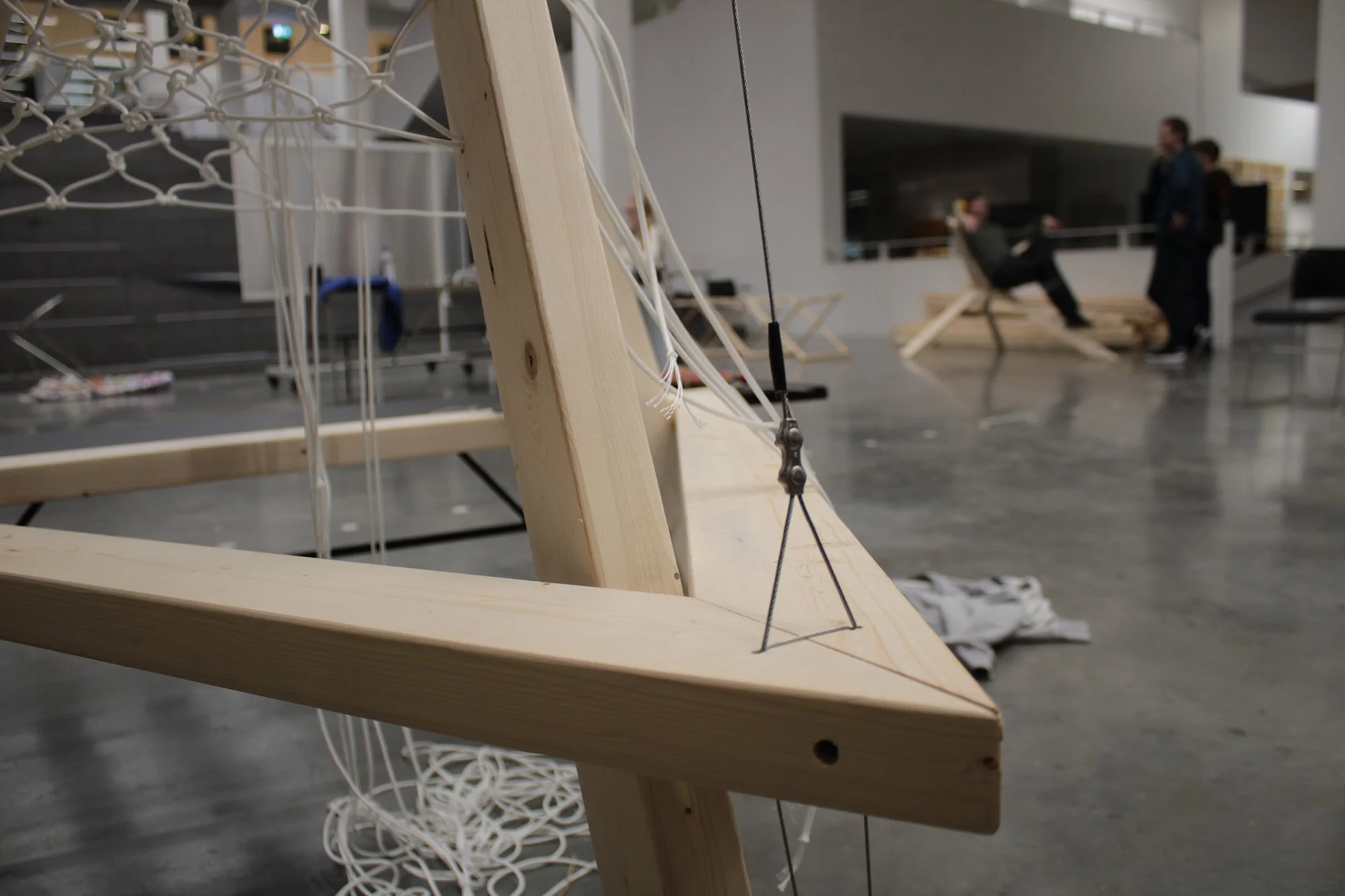
The process began with the development of performative models that made forces visible through material behavior and form. Students combined assigned 12 proto-structures ( arch, catenary, cable, cantilever, folded plate, truss, shell, etc. ) into hybrid systems, experimenting with equilibrium, load paths, and stability through iterative physical modeling. These experimental structures allowed students to test how tension, compression, bending, and balance interact within static systems, using intuition and bodily understanding alongside structural reasoning.
In the final stages, students translated their hybrid models into seating prototypes, first at scale and ultimately at full 1:1 construction. Rather than conforming to conventional notions of sitting, the designs were intended to meaningfully engage the human body — supporting leaning, lying, or alternative postures — and to directly express structural logic through material and form.